Showing posts with label phone. Show all posts

Thursday, June 30, 2011

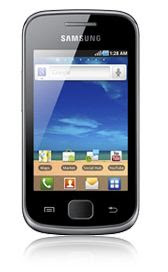
Review » Samsung C6712 Star II DUOS

Review » Samsung C6712 Star II DUOS
Seeing a large enough customer response to the dual on GSM phones seem to continue to inspire Samsung to spawn similar products. Samsung released the latest version of Duos Samsung C6712 Star II Duos. The design was different from the Samsung C6712 Star II, there was only a little difference. Star Duos II was performed with a capacitive touch screen 3.2-inch WVGA touchscreen, a little bigger than Star II (3 inches). And, to prop up his dual capacity, the battery is crammed with a capacity of 1200 mAh.

Star II Duos Samsung C6712 is not a smartphone. This phone runs the TouchWiz interface 3.0 UI, which is supported by Social Service Hub, which will bring easy access to such social networking portals facebook and twitter.

Uniquely, the Samsung DuoS immerse Star II QuickType T9 input technology for virtual keyboard, which is claimed will allow her messaging access. Another feature is the WiFi, Bluetooth 3.0 and 3.15 MP camera. While the dual on GSM phones are circulating in Eastern Europe, which for the Russian priced around $ 250

Specifications:

GSM-GSM (Quad-Band GSM); Capasitive Touchscreen TFT 262,144 color, 240 × 400 pixels, 3.2 inch, 3.15 MP camera, video (QVGA @ 15fps); sms, mms, email, IM, GPRS 12, EDGE, WAP 2.0/xHTML, HTML; 30 MB memory, microSD card slot (up to 16GB), dual SIM card slots and dual on GSM, polyphonic (MP3/WAV), accelerometer sensor, TouchWiz, java MIDP 2.0, 3.0, Wi -Fi 802.11 b / g / n, Facebook, Twitter, GTalk, AIM, Facebook chat, Yahoo IM, player MP3/WAV/WMA/AAC +, H.263/H.264/MP4 player, organizer, document viewer (word, excel, powerpoint, pdf), stereo FM radio (RDS), voice memo, Bluetooth v3.0 (A2DP), microUSB 2.0 port; battery Li-Ion 1200 mAh

http://www.icellphonereviews.com/samsung-c6712-star-ii-duos-spec-price-peview.html

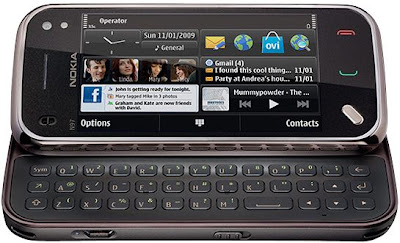
Review » Nokia N97 mini

Review » Nokia N97 mini

Homescreen


* Customize your home screen with your personality by adding widgets live feeds from social networking, news and weather services.
* Add a shortcut contacts and bookmarks on your home screen so that access friends and favorite web pages you just need one touch.
* Keep control of email, calendar and music with special widget on your home screen.
* Move the content throughout the home screen and place it wherever you like with your finger on the screen menyeretkan multi-sensory.

Design

* Communication style with a slim device that favor the smooth metal casing.
* Touch screen multi sensor to adjust the front screen with your personality and scroll through web pages, maps, photos and menu smoothly.
* See web pages, videos, photos and maps in a natural angle 35 degrees through innovative screen 3.2 "tilting.
* Get your message quickly and easily using the QWERTY keyboard on the screen that is very sensitive.

Internet

* Browse the web quickly and enjoy fast downloads via 3G connection or Wi-Fi high speed.
* See web page according to how it looks on a large 16:9 widescreen.
* Watch high-quality video and enjoy a variety of other content on the web with the support of Adobe Flash.
* Interact with various elements of a different page by using your finger and scroll with the current web page on the touch screen can be tilted.
* Access your favorite web content straight from the home screen that can be adjusted.

Navigation

* Locate your exact position to quickly and easily through the receiver built-in Assisted-GPS phones.
* Plan the perfect route from A to B with Nokia Maps preloaded.
* Explore your world and find new places with detailed maps for more than 200 countries.
* Keep moving with the right direction thanks to an integrated compass.

Music

* Take control of your music with the touch of a finger by adding media player widgets directly on the homescreen.
* Manage your music and take your music from a compatible PC with Nokia Music Manager.
* Enjoy excellent sound quality using headphones via Bluetooth connection or a 3.5 mm audio connector.
* Store up to 1700 favorite music on 8 GB of internal memory.

Ovi Service

* Plan the perfect route, do travel to the destination on schedule, and find new places with the full support Ovi Maps.
* Access to Ovi Store with a single touch of the screen and choose from the many applications, games, wallpapers and themes are exceptional.
* Find and buy new music from leading artists of the world with instant access to Nokia Music Store from your home screen.
* Upload photos and high quality video to your favorite networking site to share your experience with some of your close friends.
* Get always the latest email on your device with support for Ovi Mail.

Email

* Set many email accounts immediately and get all your messages on the device when you need it.
* Stay connected with your friends by writing a quick email with the help of a full QWERTY keyboard.
* Distribute high-quality photos with your favorite pictures directly attach to an email.

Contact

* Access your contacts list directly from the home screen by tapping the Contacts icon.
* Stay connected with friends, relatives and colleagues through instant access to Ovi Contacts.
* Get instant notification of your favorite online social network with a specific widget in your home screen.

Photos and videos

* Take a high-resolution photos and DVD quality video using the 5 megapixel digital camera.
* Get sharper images and brighter colors highlight with Carl Zeiss optics.
* Get the best photos in the evening or afternoon with dual LED flash.
* View your photos and videos directly on the big screen via TV-out cable.
* Save high-quality video up to 10 hours duration at 8 GB internal memory, or save up to 30 hours duration on an external microSD card.

Review » Samsung Galaxy Gio (GT-S5660)

Review » Samsung Galaxy Gio (GT-S5660)Gio Samsung S5660 Samsung displays a sharp, timeless design and fast performance. Smartphone offers features that are useful for all your mobility. Sharing multimedia content easily between all the devices on your network using Allshare. Enjoy live smart phone with Gio!

Timeless Polished Design with 3,2” HVGA Screen

Makeup design of this phone looks luxurious, and show your personal style. Gio phone meets aesthetic but still compact ergonomic design for easy portability and convenient use. Display 3.2 "HVGA it is ideal for viewing photos, videos, browsing and other applications with steady.

Powerful Performance with Borderless Networking

Enjoy the speed and performance advantages of this phone. Without having to wait for the movie or application load times - it all works quickly and without hassle. Wi-Fi b / g / n offers web browsing faster with a broader scope than before, and HSDPA 7.2Mbps download large files to be quickly.

Ultimate Integration

One-stop center for all your messages. Social hub, featuring a quick status check of all the messages on various platforms including email, instant messaging, social networking and SMS. Take advantage of widgets also highly functioning and easier for you.

Entertainment Center

With access to many features of the phone, enjoy fun and entertainment all the time. All of Google Mobile Services are more than 2 million applications from the Android Market available.

Convenience Center

Allshare phone to the TV, computer, stereo system, etc. on a home network so that media content sharing easy. Typing becomes easier. With the Swype, enter text faster by shifting the fingers to form words on the screen rather than push through key per letter.

Mobile Document Assistant

Access your work duties and traveling. Ms. document. Office and PDF can be accessed easily without the help of a PC.

Review » T-Mobile myTouch 4G Slide Smartphone Price and Features Announced, Claims to be THE Camera Phone (video)


Today, T-Mobile announced the myTouch 4G Slide, and they’re billing it as the best smartphone camera on the market. In fact, they’ve even gone as far as to say that it could replace your stand alone point and shoot. While we doubt the latter statement since it lacks a true flash, it does appear to be a contender to the ultra powerful iPhone 4 camera.

Zero shutter lag. That means no waiting to snap a pic. In fact, and after doing a bit of reading on the Net, the myTouch 4G Slide is constantly capturing the image into a cache. By hitting the dedicated shutter button it pulls the image from the cache associated with the time the shutter button was pressed. This insures that you can capture 8 megapixel photos consecutively without a missed shot. Something most smartphones, not even the iPhone can do. It also boasts an F/2.2, which means it can capture images in low light scenarios. However, don’t expect it to work in the dark or at the night club, though it does boast a dual-LED flash. Other camera features include a SweepShot to capture panoramic shots by sweeping across an entire scene in a single motion, and ClearShot HDR, which captures objects in bright settings so your photos are not affected by high-contrast lighting. Full 1080p video is also part of its arsenal of camera features.

Specs for the phone include a 3.7-inch touchscreen, 4G connectivity, instant photo upload access to Facebook and other photo sharing sites, a full slide out QWERTY keyboard, Android 2.3, a 1.2Ghz dual-core Qualcomm Snapdragon processor, and HTC’s Sense 3.0.

T-Mobile hasn’t said when in July it will go on sale, but we do know that it will cost $199.99 with a $50 mail-in-rebate after selecting a qualifying unlimited data plan.

Video of the device after the ‘leap’

Sunday, June 26, 2011

Review » Developments on Windows Phone Mango’s Games Hub Revealed

http://www.gadget.com/files/2011/06/mangogameshub.jpg

Microsoft has introduced the latest developments on its Windows Phone Mango, particularly with its new Games Hub. One of the biggest changes on the Hub is that it now features that were used to be relegated to a separate Xbox Live Extras app. This includes Xbox Live messaging, integrated achievements, and the ability to edit the user’s Xbox Live profile down to its fully animated 3D avatars. Players can even compare their achievements with their friends.

The 3D avatars even move depending on how the user treats the Windows Phone. Shaking the phone would make the avatar dance or even faint; abusing the phone too much and the avatar might even lash out at the user.

Another improvement is the Hub’s Collection view that lets users manage their installed Windows Phone games more easily. Games are used to be sorted alphabetically, featuring the icon on the left of the list and the name on the right. Now, if the phone has more than 20 games, the list would feature the last three titles the user has played.

Seeing these developments make me more excited about its Fall release.

Source: Windows Team Blog, via Engadget

Tuesday, June 21, 2011

REVIEW >> Native Union Bluetooth handset for iPhones

Own an iPhone of any kind? Well, if the answer is in the affirmative, you would definitely fall in love with the Native Union Bluetooth handset for iPhones that offers wireless goodness to your living room. Why should you need a wireless Bluetooth handset for an iPhone, you ask? Isn’t the iPhone by nature itself a smartphone that can be carried around sans cables and pesky wires, making you look cool like all get out (at least that happens whenever a new iPhone model is launched for a week or so)?

Well, reality check here. The answer is, you might have an iPhone of any generation, but why stop at looking cool when you can be cooler with the Native Union Bluetooth handset? It offers all the convenience of a standard phone handset, not to mention the benefits of your iPhone device, all in a single form factor that boasts of a sleek and curved wireless handset system that supports Bluetooth 2.1 multipoint technology, making sure your beloved iPhone is transformed into a cordless landline which allows you to pair and answer calls on a couple of different Bluetooth enabled devices.

It is a snap to connect to the Native Union Bluetooth Handset and to synchronize your iPhone and a smartphone for regular calls, or using any other Bluetooth-enabled device such as a notebook, as all of them will rely on VoIP Internet calling including Skype.

Not only does it look great, it sounds great to boot – with the added incentive of having it juice up your iPhone while it is docked. With a high-quality speaker and microphone to deliver optimum call sound quality, you can be sure that the message gets across crystal clear, leaving no room for confusion between you and the other person on the line. A silicone mat has been thrown into the mix to protect your phone from additional wear and tear, which is a good thing considering the money you paid for the recently unlocked iPhone.

Expect to fork out $149.99 for the Native Union Bluetooth handset for iPhones.

REVIEW >> Orange UK’s T shirts That Charge Your Phone With Sound

With portable devices becoming a more integral part of daily life, it may be important to keep them powered up all the time. But it may be not always possible since device chargers usually require a power outlet in order to get some charging power. There are now other options available such as solar powered chargers. Orange UK is offering a unique way to charge your portable devices- using T shirts that generate electric power through sound.

Orange UK has developed the prototype Orange Sound Charge T shirt that allows users to connect their mobile phones to it and charge them using power generated from any type of sound in their immediate environment. The prototype T shirt cum charger is equipped with special piezoelectric film that absorbs sound and generate power enough to recharge a mobile phone. Since it generates power through sound, Orange UK will be testing the prototype t shirt at the Glastonbury Festival this year. There would truly be enough sound to go around and power up that phone.

Image Source: Orange UK

REVIEW >> Swissvoice ePure Telephone

Even while mobile phones have taken the place of the ordinary landline telephone in terms of usage, they still do find a place at the home or the office. Their use is still considered essential, especially if those mobile phones run out of power. But just because home landline phones may be considered as an old invention by most folks doesn’t mean that they can’t be designed to look more up to date. Just by looking at this new Swissvoice ePure Telephone and you will get the idea.

The new Swissvoice ePure Telephone is how an old home device should be designed to look more updated. The design is followed after that of a computer icon of the device but still holds on to some if its classic features for its handset and base. That makes it current in terms of looks and yet still have that classic touch.

In terms of features, the Swissvoice ePure Telephone get some modern upgrade. The handset is wireless and comes with a 1.4″ dot matrix display. It also provides handsfree operation and comes with a clock and appointments alarm, adjustable ringer and loudspeaker volume as well as a 100 name phone storage. The Swissvoice ePure Telephone is available at Firebox for 70 UK Pounds or around US$113.

Image Source: Firebox

REVIEW >> BlackBerry® Style™ 9670

Full support system

Effortless email and text
Master your messages with push notifications that alert you when you have a new email or text. See all your messages in one easy-to-manage list.

Connect in real-time, anytime
Whether you’re planning a night out, swapping files or just touching base, BBM™ is your instant connection to the people in your life. And with unlimited message length, you can be sure your thoughts get across.

Multitasking
Jump from app to app in a flash on your BlackBerry Style smartphone. Your apps stay connected whether you’re using them or not. So whatever you’re up to, your notifications keep coming through.

Wi-Fi and 3G
Enjoy fast downloads and browsing as you switch seamlessly between Wi-Fi® networks and high-speed 3G networks. The BlackBerry Style is super-responsive.

An evolution in flip

External display
Flip your smartphone shut to protect the screen and keyboard, then use the external screen to check the time, screen your calls and preview messages.

Internal display
Flip it open and enjoy the 360×400 pixel display — the same full screen view that comes with other BlackBerry smartphones. It’s big, bright and easy on the eyes—ideal for video clips and web browsing.

Battery life
Take care of email, phone calls and Facebook® messages without worrying about where you’re going to charge up next. The battery on your BlackBerry Style 9670 is designed to keep going as long as you do.

4.5 Hours of talk time
14 Hours of music playback

GPS and BlackBerry Maps

What’s more practical than asking for directions? Having built-in GPS on hand with BlackBerry® Maps to help you find the nearest gas station, bank, pharmacy or diner.

Features

Open & shut

  • Closed                                 Open
    Height    3.78 in / 96 mm       6.91 in / 175.5 mm
    Width    2.36 in / 60 mm       2.36 in / 60 mm
    Depth    0.73 in / 18.5 mm     0.73 in / 18.5 mm
    Weight    4.62 oz / 131 g       4.62 oz / 131 g

Beautiful inside & out
  •     High-resolution internal display: 360×400 pixel
  •     High-resolution external display: 240×320 pixel
  •     Transmissive TFT LCD
  •     Supports over 65,000 colors
  •     User-selectable font size
Room to grow
  •     512 MB onboard memory
  •     8 GB media card included
  •     Expandable memory with support for microSD card up to 32 GB

Stay in charge
  •     1150 mAHr removable/rechargeable lithium-ion battery
  •     Talk time: Up to 4.5 hours
  •     Standby time: Up to 10.5 days
  •     Music playback: Up to 14 hours

Capture the moment
  •     5 MP camera
  •     Continuous auto-focus
  •     Image stabilization
  •     Flash
  •     11 picture-taking modes
  •     VGA (640×480) video recording

Find your way
  •     Built-in GPS functionality
  •     Includes BlackBerry® Maps

Typing & navigation
that suits your life

  •     Trackpad
  •     Full QWERTY
  •     ESC key to right of trackpad
  •     Menu key to left of trackpad
  •     Keyboard backlighting

Impressive
music & video


    Video formats: H.263, MPEG4 Simple Profile 3, H.264, WMV
    Audio formats: MP3, AAC-LC, AAC+, eAAC+, WMA, AMR-NB, QCELP EVRC

Covered by Wi-Fi
  •     802.11 b/g/n3
  •     WPA / WPA2 Personal and Enterprise
  •     Cisco CCX certified
  •     Wi-Fi® access to BlackBerry® Enterprise Server
  •     Wi-Fi access to BlackBerry® Internet Bundle

Sounds good
  •     3.5 mm stereo headset jack
  •     Built-in speakerphone
  •     M4/T4 (open position only) rating for hearing aids

For more information visit http://us.blackberry.com

REVIEW >> Samsung Droid Charge 4G Verizon Smartphone


Verizon Samsung Droid Charge Price Tag Finally Plummets

The Samsung Droid Charge comes in as one of the most expensive smartphones on Verizon Wireless. Coming in at a whopping $299.99, it makes the base Verizon iPhone 4 model look like an affordable feature phone.

Samsung Droid Charge 4G Review :  There are certainly a lot of Android powered phones, and many of them work very well, offer great features, and promise great performance. But many come up short in one area or another. The Samsung Droid Charge 4G is called the “fastest and most powerful Droid ever created” (by Samsung), and is the first DROID phone released on the speedy Verizon 4G (Long Term Evolution) LTE network.

With a very impressive processor, mobile display technology that is being called the best of 2011, and a multimedia set that has something for everyone, the Droid Charge certainly looks great. But does it deliver the goods? Let’s take a look.

First, let’s see the processor that is showing up in so many top-flight smartphones, the 1 GHz Hummingbird processor. I am always a big fan of a phone that uses technology made by the maker of the phone. You know you will get great compatibility, and that is the case here.

You can buy the Samsung Droid Charge 4G starting at $179 at Amazon!

Samsung makes the Hummingbird processor, they also developed the 4.3 inch Super AMOLED Plus screen technology that is regarded as the best in the business, and also the Droid Charge itself. And the result is a smooth operating Droid phone with great speed, visuals and multimedia options.

Add speeds that are up to 10 times faster than the Verizon 3G network on the LTE system, and you have a speedy, efficient phone that can handle multitasking and any multimedia requests you can dish out. The Froyo 2.2 OS gives the user full Adobe Flash support for great graphics, video and web page rendering, and also makes instant download access to hundreds of thousands of apps on the Android Market possible.

At 32 GB memory on the included microSD card, you get 2 to 4 times the memory in most other 4G smartphones, and the $179 retail is right at the mid-range end of the $129 to $299 4G smartphone market. The Samsung Droid Charge 4G Verizon smartphone delivers the goods, is priced right, and runs on an extremely fast network. Shopping for a 4G smartphone? Check out the Samsung Droid Charge for top level 4G smartphone performance and value.

You can buy the Samsung Droid Charge 4G starting at $179 at Amazon! Upgrades cost a little more, priced at $199, a savings of $50 to $100 over the Verizon price tag depending which type of customer you are.

While we can’t figure out why it was priced above its two other 4G LTE siblings, the HTC Thunderbolt 4G and LG Revolution, the good news is that its price tag is finally beginning to plummet and Wirefly has an awesome deal for us.

Wirefly is now offering the Samsung Droid Charge Android Phone for only $179.99 – $50 Coupon (CHARGE620) + Free Activation and Shipping = $129.99!

This comes in cheaper than both the HTC Thunderbolt 4G and LG Revolution (and even the iPhone 4). For that low price you get a 1Ghz Hummingbird chipset, 8-megapixel rear camera with 720p HD video recording, front facing 1.3-megapixel camera, mobile hotspot for up to 10 devices, and of course 4G LTE connectivity.

In our recent comparison between Verizon’s 4G LTE Androids, all three devices came in on par with one another. So if you’re looking to score a 4G LTE smartphone now then the Samsung Droid Charge with its Super AMOLED display isn’t a bad option, unless of course you can wait a while for the Motorola Droid Bionic.

REVIEW >> HTC Lead Dual-Core AT&T Phone Specifications

HTC Lead, that is, and it’ll be spurring your interest soon, probably inside 2011 if they’re smart since NVIDIA’ll be changing the entire game again with their KAL-EL quad-core processor by the end of the year. This phone looks to be basically identical to every other HTC phone that’s been released this year save for the speaker grill above, which instead of being a long silvery thing is now a short black thing.

This device will be rolling out with a 4.3-inch display blasting through your eyeballs with WVGA, will be toting no less than Qualcomm’s MSM8660 1.2 GHz dual-core Snapdragon processor, and will be rocking with 768MB of RAM.

Also check out that gigantic honking volume dongle there on the left. Lookin great for audio adjustment in 2011! On the back there’ll be a 5-megapixel camera, on the front there’ll be NO camera, and there’s no word on a released date, version of Android, or version of Sense.

A mid-range HTC phone with a dual-core processor? Furthermore, who releases a phone at only WVGA in these days of Super AMOLED Plus colorblasters? This is quite the mystery wethinks and one to keep pondering until it turns to metal or it turns to fluff.

Both smartphones are high-end android smartphones with the Snapdragon MSM8660 chipset 1.2GHz dual-core processor beating inside, Adreno 220 graphics, LTE and HSPA + support HSDPA (21Mbps) and HSUPA (5.76Mbps).

The HTC Holiday should equip a qHD display screen measured at 4.5 inch, 1GB RAM, 8 mega pixel snapper with Full HD 1080p camcorder, 1.3 mega pixel front-facing camera to assist video-calls, and Bluetooth 4.0 unblemished between the standard connectivity options.

While the HTC Lead sports a little cut-downed display of 4.3-inch (WVGA), 768MB RAM, 5 mega pixel camera (uncertain video-capturing), and Bluetooth 3.0 besides to all the classic connectivity options.

HTC Lead specifications more details you can see below :

General2G NetworkGSM 850 / 900 / 1800 / 1900
3G NetworkHSDPA

LTE
AnnouncedNot officially announced yet
StatusRumored
SizeDimensions-
Weight-
DisplayTypeCapacitive touchscreen, 16M colors
Size480 x 800 pixels, 4.3 inches

- Accelerometer sensor for UI auto-rotate - Multi-touch input method
- Proximity sensor for auto turn-off
- HTC Sense UI
SoundAlert typesVibration, MP3, WAV ringtones
LoudspeakerYes
3.5mm jackYes

REVIEW >> HP Touchscreen Nokia N9 Lankku New

HP Touchscreen Nokia N9 Lankku New with Design Section Appears His photographs.

If you’re among those waiting for Nokia to lay down a proper MeeGo powered phone, take a good long look at the two images above. On the right, Engadget’s leak of the Nokia Lankku. A nice pair, no?

The Lankku (possibly the N9-01, depending on Nokia’s whim) will apparently run Harmattan, which comes as little surprise: Nokia’s been talking about the Maemo-infused MeeGo variant as recently as May’s MeeGo Conference in San Francisco — and if it wasn’t in this device, we’re not sure where else it’d go.

The hardware here is rumored to be just a little thicker than an iPhone 4 and feature 960×540 resolution plus an 8-megapixel shooter with autofocus. The rumored landing date is sometime in Q3 for European customers.

We are hoping to hear more details from CEO Stephen Elop tomorrow at Nokia Connection 2011 in Singapore, which Nokia hints will be “the launchpad for a global launch.” Nokiablog.ch also spotted the “Nokia N9 – Lannku” in the source code for Nokia’s Vietnam site, so an announcement looks pretty likely. Hopefully said announcements will include a solid ship date and a little more clarity on Nokia’s plans for Harmattan and MeeGo.

Meanwhile, we’ll do our best to avoid imagining this hardware running Windows Phone – some things are just too distracting

Not only is this thing running the mouthful (read Harmattan) version of MeeGo, it also comes equipped with an 8 MP camera and a qHD display. I personally don’t see this N9-01 becoming a best-selling device overnight for a variety of reasons. Like I said, Nokia was never committed to MeeGo, or else we would have had a few MeeGo phones in the wild by now.

Windows Phone 7 is what Stephen Elop and Co. are interested in so MeeGo may not have a real future with the company. Then there’s MeeGo itself, an OS that has not grown into an iOS or Android rival. Last but not least there’s the iPhone, Android, WP7 and BlackBerry devices, or, in other words, plenty of reasons for Lankku to be ignored by shoppers.

Monday, June 20, 2011

Full REVIEW >> Samsung DROID Charge


I’ve spent more than a week living and breathing alongside the Samsung DROID Charge, Verizon’s second 4G LTE smartphone, and and it had some pretty big shoes to fill following Verizon’s first 4G LTE smartphone, the HTC ThunderBolt. The DROID Charge is loaded with all the trimmings you could ask for, including a huge Super AMOLED Plus display with colors that will blow your mind, an 8-megapixel camera that can shoot HD video, and of course, support for Verizon’s 4G LTE network. But do all of these features make it worth the $299 you’ll have to drop in order to own one? Hit the break for my full review to find out.


Hardware / Display


Samsung told me that the “pet name” for the DROID Charge was the “Stealth,” and that’s certainly an accurate description of its industrial design. The area below the phone’s large 4.3-inch screen tapers down to a small chin, and its rounded edges, glossy mirror gray finish, and sharp accents around the camera lens definitely add to its fighter-jet style. Samsung’s Super AMOLED Plus display is one of the clearest, brightest, and sharpest screens I’ve ever seen on a smartphone. The display offers even deeper blacks than the Super AMOLED screen on Samsung’s Galaxy S phones, which is really saying a lot. Colors are stunning and you really just have to see it to understand the beauty, but a beautiful screen this size comes at a cost; the DROID Charge definitely has a bit of heft at just over 5 ounces, but at just 0.46-inches slim it easily slid into my pocket.


Unlike the Galaxy S devices before it, the DROID Charge has hardware keys below the screen instead of touch-sensitive buttons. The keys have nice bounce and each has a soft white backlight that illuminates while the screen is activated. Under the hood the DROID Charge runs on a 1GHz processor, which is a bit lower powered than the dual-core NVIDIA Tegra 2 devices that have started to infiltrate the market. Still, there’s 512MB of RAM that helps speed things up a bit, and our unit came with a 32GB microSD card so there’s more than enough space to store videos, music, and photos. A 32GB microSD card runs about $60 on Amazon, so I’m starting to see why the DROID Charge is priced as high as it is.


One feature that I really enjoyed using was HDMI-out. You can purchase movies from Media Hub for about $9.99 each, or move files over to the phone using your USB cable, and then output them to an HDTV using a mini-HDMI cable. There were a few hiccups in the frame rates, but otherwise the movie played without a hitch. I’ll revisit this a bit more in the camera section of the review.


Software


Here’s where things get a bit stale: The DROID Charge runs Android 2.2 (Froyo) with Samsung’s custom TouchWiz user interface on top. I’m not a big fan of TouchWiz — it’s too cartoony looking, the widgets are always larger than necessary, and they don’t use screen real estate efficiently. There are several useful features, like the ability to sync Twitter or Facebook with your address book, but generally TouchWiz turns me off. Thankfully, the DROID Charge’s processor hummed along just fine despite the UI, which can slow things down just a bit on other devices. There are  also other small issues that drive me mad about TouchWiz, though — like its black e-mail interface — and at times I just wish Samsung had stuck with a vanilla version of Android on the Charge.


The Charge’s virtual keyboard mirrors those on Samsung’s Galaxy S devices, and I’m not a fan. The space bar is too small and seems to be positioned too far to the left; half the time I try to type a space I end up hitting the period button instead. This, of course, is where third-party developers come in, and I definite;y recommend installing your third-party keyboard of choice on the Charge.

There’s a fair amount of bloatware on the phone including VerizonApps, a Guided Tour, VZ Navigator, TuneWiki, City ID, Bitbop, and more. Thankfully, though, Verizon chose to use Google as the default search option on the DROID Charge, which is a welcome change from the Fascinate.


Calling / Data


The call quality on the DROID Charge was clear during my tests and I had no issue with dropped calls in New York City or during a trip to Orlando for BlackBerry World. Friends and family on the other end of the line said I sounded good, and the ear speaker was loud enough even while walking on busy streets. The speakerphone had adequate volume as well, but voices were distorted at higher levels. Callers said I sounded fine on speakerphone and they couldn’t tell I wasn’t directly talking into the handset.

The DROID Charge is Verizon’s second phone capable of placing phone calls while surfing the Internet, and this feature worked perfectly during my tests. I looked up a quick place to eat lunch while I had a friend on speakerphone, and I didn’t notice any drop in call quality or data speeds. BGR Editor in Chief Jonathan Geller, in his ThunderBolt review, wondered if perhaps the poor voice quality on that phone was related to the talk / surf feature, and I’m glad to report that’s not the case with the Charge.


Data speeds on Verizon’s 4G LTE network regularly exceeded 20Mbps on the downlink in New York City, and I typically saw upload speeds around 4Mbps. The download speeds are faster than you’ll find on any other U.S. carrier hands-down and are even on a par with home network connections.

There are drawbacks to being an early adopter, however. During my first week of testing Verizon’s 4G LTE network, it went down for just over 24 hours. Users weren’t compensated for the downtime, and I couldn’t even access a 3G network during the outage. That’s a big deal, especially for business users or those of us who rely on our smartphones throughout most of the day. Similarly, while tethered to a laptop, I noticed that the signal dropped a number of times, and there are reports from some websites claiming the same issue — hopefully this is something that will be fixed in a future software update. I’m not dinging Verizon, though; it’s the first to roll-out such a high-speed network and there are bound to be small hiccups along the way.


Battery Life


The DROID Charge moniker is quite fitting as I found the 1,600mAh needed frequent charging under heavy 4G use. The phone offered up better battery life than the 4.5 hours Jonathan saw with the HTC ThunderBolt, but it still wasn’t great. Generally, I was able to go from about 7:00 a.m. until 2:30 p.m. with moderate usage on 4G.

If you need to save battery life, there’s an option under wireless network settings to use a CDMA network only. This let me place voice calls and use Verizon’s slower 3G EV-DO network for surfing the Web. It’s definitely a welcome change over the HTC ThunderBolt, which didn’t ship with that option, although an app is now available. With 3G enabled, I was able to get through a full work day with moderate usage. Unfortunately there isn’t a widget to quickly switch networks out of the box; that would certainly be a welcome addition, but I’m sure Android enthusiasts will whip something up to fix that.


Camera


There’s an 8-megapixel camera on the DROID Charge, and I used it to shoot a bunch of photos during a trip to Florida. Images were crisp and colors looked true in daylight. Photos look amazing on the Super AMOLED Plus screen, and they just had a little distortion when I pushed them out to my 32-inch TV using HDMI-out. Pictures snapped under incandescent lights had a decidedly orange hue to them, but were otherwise perfectly acceptable.

A night shot taken of a neon sign, without the flash, had brighter colors bleeding into the darker areas of the screen, even with the camera’s anti-shake feature activated. In lower light conditions, the single-LED  flash did a decent job grabbing our subject, too, but I prefer the dual-LED option on phones like the HTC


ThunderBolt.


I shot several HD video clips in 720p, but the DROID Charge defaults to a 720 x 480 resolution, so you’ll want to be sure to activate the HD option for better video. The frame rates were fluid when I played the video back on the Charge’s display, and I was just as blown away when I watched the same clip on my TV using HDMI-out. The video and audio were both crisp and I didn’t notice any pixelation, even when panning the video around. One issue I did run into, though, is that the phone required a reboot when I unplugged the HDMI cable and then tried to plug it back in again to resume playback.


Wrap-up


If you’re looking for 4G speeds, the Samsung DROID Charge is the phone to beat — but you’ll need deep pockets. Sure, I’d take HTC’s Sense user interface over TouchWiz any day, but the DROID Charge offers a few things HTC’s ThunderBolt doesn’t, namely a gorgeous Super AMOLED Plus display and an out-of-the-box option to turn off 4G to save on battery life, which meant I was able to get through a full day with moderate usage when I didn’t need to surf the Web at blazing fast speeds.

The DROID Charge is priced at $299, which is $50 more expensive than its only 4G LTE competitor, the ThunderBolt. That’s for good reason, however. It offers better battery life, a killer display, clearer phone calls, and a much less bulky design — easily worth the $50 difference. Sure, Verizon has a number of new 4G LTE smartphones coming down the pipeline, but if you want in on the carrier’s blazing fast data now, the DROID Charge is your best bet, hands-down.

Sunday, June 19, 2011

Full REVIEW >> Samsung Galaxy S II


The Samsung Galaxy S II is Samsung’s second version of its extremely popular Galaxy S line of handsets — one it has done a great job of launching across a variety of carriers. The Galaxy S II raises the bar in every way from the first Galaxy S, as it should. But it also takes things one step further and absolutely obliterates every other Android handset on the market in the specifications department. It’s not just fast, it’s the fastest. It’s not just thin, it’s the thinnest. But is it the best? Hit the break to find out.


Hardware / Display


Most people love or hate Samsung’s hardware, but I find myself uncharacteristically on the fence. On one hand, Samsung pumps out solid hardware that has always been widely adopted around the world. On the other, there appears to be a little separation, at least where the U.S. market is concerned, on what people really consider to be a quality product. There’s a fine line between making a device extremely light, and one that feels cheap and unworthy of a $200 price tag. The Samsung Galaxy S II is the thinnest smartphone I have ever tested, and it’s also one of the lightest. It’s even thinner than the iPhone 4, and it’s much lighter.


One of the reasons the device is lighter, however, is due to Samsung’s continued use of what feels like a low-cost glossy black plastic for the handset’s shell. The saving grace on the Samsung Galaxy S II, however, is that the rear battery cover isn’t a typical high-gloss Samsung extravaganza, but a textured matte-finished cover.

On top of the device you’ll find a 3.5mm headset jack with secondary mic for noise cancellation. On the right side is a power button and the volume rocker is on the left. Around front there’s a 2-megapixel camera for video chat, and three of the four typical Android navigation buttons. Samsung hasn’t included a dedicated search key, though in daily use, I rarely found myself hunting for it. The home button is a physical rectangular key, and the back and menu keys are capacitive and work quite well. A nice touch is that they light up for a short period of time when the screen goes on, and then they dim and blend back into the black facade of the Galaxy S II.


As far as specs go, the Samsung Galaxy S II is, for lack of better works, a beast. We’re talking about a 1.2GHz dual-core Orion processor, 1GB of RAM, Android OS 2.3 Gingerbread, an 8-megapixel camera with LED flash and 1080p HD video recording, and 21Mbps HSPA+ support.

The Samsung Galaxy S II also features Samsung’s Super AMOLED Plus display, and it’s one of the best screens I’ve ever seen, easily besting the display on the Google Nexus S. Black levels are incredible, colors are vibrant, bright, and the display is very sharp. Viewing any sort of content with a black background will melt into the black front case around the display and make it difficult to tell where the screen starts and the case ends — it’s that good.

The Galaxy S II is also the fastest Android phone I have ever used, hands down. It’s evident across the entire OS, with web pages loading at desktop-like speeds. There’s absolutely no lag while zipping around from app to app or screen to screen, and it makes the entire Android experience much more enjoyable.


TouchWiz


Let me just get it out of the way: I’m a stock Android guy. I don’t care for any custom UI from any manufacturer on my Android device at this point. With that said, TouchWiz has it’s ups and downs. I’m not a fan of Swype or Samsung’s keyboard so I replaced the keyboard with the stock Gingerbread keyboard. I’m also not a fan of the email app and the calendar app also looks like Times Square at 2:00 a.m. — I’m just not feeling all the use of black backgrounds here. I do, however, like how you can edit the number of home screens on your device — I like three, not seven, home screens — and while I don’t use any of Samsung’s widgets, I appreciate the creativity some of them showcase.

For the average user, it’s certainly possible TouchWiz could help more than it hurts. It’s definitely more lively than what stock Android is, and it could be more straight forward to the general consumer.


Battery


Battery life typically isn’t a strong point on Android handsets, but the Galaxy S II performs very well thanks to its large 1,640 mAh battery and no doubt thanks to its power sipping dual-core Orion processor as well. Standby time lasts days — up to around three days with corporate push email on and various background apps. The Galaxy S II should no doubt be able to power you through a normal day’s worth of usage as well.


Conclusion


Hands down, the Samsung Galaxy S II is the greatest Android smartphone available on the planet… if you can get past TouchWiz. It’s the fastest smartphone I’ve ever used, it features one of the best displays I have laid eyes on, it offers great signal reception and audio performance on AT&T, it has a great camera, it’s very thin and light, and even better, it’s free from any carrier’s wrath (restrictions) since it’s the unlocked global version. The downside is that it’s not subsidized so it’s going to run you around $800 — for reference, a 32GB iPhone 4 without a contract runs $699. Of course we expect the Galaxy S II to launch under various names on all four of the major U.S. carriers, so those who don’t mind branding and bloatware will have the option of picking up this phone from your carrier of choice soon enough.

While I would have preferred to see stock Android on the Galaxy S II, the phone is so good that TouchWiz doesn’t hold it down too much, at least for me. In fact, Samsung is going to have trouble getting this one back. And who knows? Maybe I’ll even switch to Android as my primary daily carrier just for this device. Well, probably not.

Full REVIEW >> Sony Ericsson Xperia PLAY


Sony Ericsson’s Xperia PLAY is the company’s first smartphone focused on bringing serious gaming and a powerful handset to the masses. The slide-out PlayStation-style game controller is innovative and it enables you to interact with games on your smartphone in ways that just aren’t possible on a touchscreen-only device. With that said, there are some obstacles in the way — PlayStation Suite offers limited games, and there are some pretty big bugs even on the stock Android handset. Do the positives outweigh the negatives, though? Jump past the break to find out.


Hardware / Display


The Xperia PLAY’s hardware is, for lack of a better word, interesting. Closed, the device feels like a reasonably thick Android handset. With glossy black plastic and glossy chrome finish, the PLAY doesn’t exude high-end fit and finish, but it doesn’t feel cheap either. It’s deceptively well-weighted, even when opened, and the only complaint I have about the hardware when holding and using the phone is that the left and right triggers on the top of the handset can get in the way when the device is being held one-handed.


The display on the Xperia PLAY is great. It’s crisp, it’s clear, and the colors seem to accurately display anything I can load up on it. It’s one of my favorite displays, to be honest. Sony Ericsson has a beautiful screen with a touch sensitivity that can almost rival Apple’s perfected digitizer and screen. I really can’t say enough about this touch display, it’s probably my favorite of any Android handset, even more so than any qHD displays I’ve seen and used. It’s something Sony Ericsson has just got right, and it’s really refreshing to see.


The Sony Ericsson Xperia PLAY doesn’t fall short in the button department, either. On the front of the device you’ll find the four traditional Android menu keys, and while these are meant to serve as the primary navigation keys for the device, I can’t help but think Sony Ericsson could have implemented something better. Besides being difficult to press in some scenarios, they are ridiculously close to the display itself, and I’ve found myself accidentally tapping the display when I’ve been trying to hit the back button, for example. The layout isn’t ideal, but that’s more of a personal preference.


On the left side of the handset, there’s a 3.5mm headset jack and a microUSB port for syncing and charging. On the top of the device there’s a power on / off button, but the button isn’t on the display part of the sliding mechanism, it’s on the main middle frame. It’s a little niggle, but it would have been great if the power button was on the display piece as it would make it much easier to press when using the device one-handed. A nice touch is that there’s a notification light built into the power button that will let you know of any unread message or alerts, however. On the right side of the PLAY you’ll find left and right trigger buttons with a volume up and down rocker placed in between them.


Something that’s been truly irritating is the lack of an ambient light sensor on the Xperia PLAY. It’s one of the only smartphones in the last few years I have ever seen that lacks this feature, and while it’s not a show stopper, it’s inconvenient to have to go into the device’s setting to manually change the brightness level of the display in different lighting environments.

UPDATE: The Sony Ericsson Xperia PLAY does in fact have an ambient light sensor, it’s just not user-controllable in the settings, and it doesn’t perform too, too well, thus the reason for mistaking it’s existence.


PlayStation Controls


There isn’t a bunch to say here… the Sony Ericsson Xperia PLAY is the first smartphone to feature an actual gaming-grade gamepad, and it’s pretty close to being amazing. There’s enough tactile feedback on every button to make it feel fantastic while playing games, and the button layout is perfect. Compared to add-on third-party attachments for the iPhone or Android devices, the Xperia PLAY really sets the mobile smartphone gaming bar. One of the best parts is the ability to take a third-party app and assign the gamepad buttons to the game or emulator.


Phone / Battery


I have had serious connectivity issues with the Xperia PLAY on Verizon Wireless. I’m not sure if it’s just this review unit in particular, but in places that normally have 3G reception, I was stuck on 1X, and the phone kept on holding a 1X signal instead of switching back to a 3G one. Additionally, the signal level reported by the PLAY was much lower than other Verizon Wireless devices in the same room on the same desk. While this isn’t a scientific method by any means, it’s a little frustrating to see just one or two bars on a Verizon handset in and around New York City — especially when other Verizon phones were getting full signal just a few inches away.


Battery life is pretty decent despite the reception issues, and were completely acceptable for a CDMA smartphone. The Xperia PLAY powered through a day of moderate usage including emailing, web browsing, light calls, and hours of game playing. Your mileage will obviously vary, but all in all the battery on the Xperia PLAY should suit most people’s usage just fine.


Conclusion


The Sony Ericsson Xperia PLAY is one of the most enjoyable game-focused smartphones I’ve ever used. With a solid slide-out hardware gamepad, a fast processor, and stock Android 2.3 Gingerbread, the PLAY is truly in a league of its own. That’s not to say I haven’t had my share of frustrations with the handset. The power button seem glitchy as far as the software is concerned — the phone just won’t turn back on sometimes after the screen is locked, and it’s incredibly frustrating. Verizon’s solid voice and data network didn’t agree with my particular unit, and while I’m not positive this is an across-the-board issue, signal reception and connectivity were probably the worst of any Verizon handset I’ve used in recent memory.

I like the overall concept of the Xperia PLAY — one of the only companies in the world that could pull off a pure gaming handset is Sony Ericsson — and this is a valiant first effort in the space. But in the end, the Xperia PLAY is a little chunky and it feels like it needed a little more time in the oven. If Sony Ericsson decides to introduce a follow up handset, I have no doubt it will be a formidable mobile gaming smartphone that few if any devices could rival. The current iteration is more a concept than a full-fledged gaming device and platform, though if you’re a hardcore gamer, you probably won’t be disappointed with the Xperia PLAY. For general consumers, I’d probably recommend waiting for the follow-up version, however.

Full REVIEW >> HTC DROID Incredible 2


The DROID Incredible 2 recently landed on Verizon Wireless, and it has some tough shoes to fill. When the original launched, it was BGR’s favorite Android phone to date despite stiff competition from the Motorola DROID, which launched at the same time. The DROID Incredible 2 packs some decent hardware, like a 1GHz processor, an 8-megapixel camera capable of recording 720p video, and more, but its specs — and data speeds — don’t match those of phones at the higher end of Verizon’s portfolio. Is the DROID Incredible 2 a worthy successor to the original or does it fall short? Read on to find out!


Hardware / Display


I remember reviewing the original Incredible and feeling a sense of loss the day I had to send it back. It had a unique race-car inspired design and HTC even had interchangeable red and white covers for the back panel that you could buy separately. The whole idea was that HTC was totally tweaking the industrial design of the phone to really get consumers turned on to the sexy designs possible with a mobile device. There’s less shock value with the Incredible 2. The red battery compartment is gone, the contours aren’t unique anymore, and the whole device feels too similar to the original to be exciting.


The phone feels excellent in the hand, though, and the soft-touch black finish provides good grip. The volume keys are in easy reach on the top left hand side, there’s a 3.5mm headphone jack on the top across from a power button, and the back is home to an 8-megapixel camera and a dual-LED flash. I love that the menu, home, search, and return buttons automatically rotate so that they’re displayed correctly in both landscape and portrait view. HTC should definitely carry that feature into other phones.

The most noticeable difference on the Incredible 2 is its larger 4-inch 800 x 480 resolution display. I like that it’s bigger than the original 3.7-inch screen on the first Incredible, which was a hair too small, but I’m disappointed that HTC ditched the AMOLED display panel. Text looks decent on the screen, but the colors don’t pop in the way they did on the original Incredible. The trade off is that the current display is much easier to view under direct sunlight, however.


I’ll discuss the rest of the hardware in various parts of this review, but here’s a quick rundown of the raw specs: the DROID Incredible is powered by a 1GHz processor — that’s the same clock speed as the original — and it has an 8-megapixel with a dual-LED flash, a 1,450 mAh battery, a 1.3-megapixel forward-facing camera for video chat, and a 16GB microSD card pre-installed.


Software


The Incredible 2 is powered by Android 2.2.1 (Froyo) with HTC’s custom Sense user interface running on top, and its 1GHz powered through it all just fine. Unfortunately, the phone is not loaded with HTC’s new revamped version of Sense, which will make its debut on the T-Mobile HTC Sensation 4G any week now. I’ve always been a big fan of Sense. It’s one of my favorite Android user interfaces, but it’s hard to recommend software that’s already being replaced. The DROID Incredible 2 also runs Android 2.2 (Froyo), too, instead of the newer Android 2.3 (Gingerbread) OS.

Thankfully, there’s relatively little bloatware installed, save for V Cast Apps, V CAST Media, V CAST Music, V CAST Tones, and V CAST Videos. Verizon has pre-installed some other software, including 3G Mobile Hotspot, Blockbuster, Amazon Kindle, Lets Golf 2, NFS Shift, Skype Mobile, NFL Mobile, Slacker, and more, but those applications are often very popular Android apps, too, and I’m a big fan of many of them. The 3G Hotpsot application will allow you to share your 3G connection with other Wi-Fi enabled devices, and I used the Incredible 2 hotspot during an entire workday without any connection drops.


Calling / Data


Calls on the DROID Incredible 2 were solid, as is typically the case on Verizon’s phones in New York City. During a test call, the other party said I sounded “clear” while walking on the streets of New York City, and she said she couldn’t make out the background traffic. The speakerphone was a bit watery but the volume was sufficient. As far as data, the Incredible 2′s data speeds were just OK. I averaged 1.2Mbps on the downlink and 1Mbps up, which is good enough for a 3G phone but a far cry from Verizon’s brand new 4G LTE network which offers download speeds that are nearly 20 times that.


Camera


The Incredible 2 packs an 8-megapixel camera, just like the original, and can shoot 720p HD video. I was satisfied with the images I snapped — they look great on the phone itself and just as solid blown up on a computer screen. Unlike some newer phones, the Incredible 2 isn’t capable of auto-focusing while shooting video, though, which was a bit of a disappointment. Similarly, it lacks an HDMI-out port, so you won’t be able to show videos or photos on your bigscreen TV, another feature that’s supported by many other high-end devices.


Battery Life


During my few days of testing I didn’t have any problem getting through a full day of moderate use before the 1,450mAh battery ran out on the Incredible 2. Verizon rates it for 6.5 hours of usage, though, so you’ll want to bring a charger along if you’re planning to watch movies during a long plane ride or car trip.


Wrap-up


The DROID Incredible 2 is a good phone — there’s nothing inherently wrong with it — but I don’t think it brings the Incredible brand forward at all. In fact, there really isn’t anything “incredible” about it. The phone is very similar to the original, save for a larger screen and some small tweaks like a forward-facing camera, but at $199.99 it costs just as much as dual-core smartphones like the DROID X2, and it’s $50 shy of Verizon’s 4G LTE smartphones that offer much, much, faster data speeds. Is it a solid follow-up to the original? No. In fact, I like the original better.